|
Prof. Jean Bellissard (Georgia Institute of Technology)
|
|
Topological Invariant in Disordered Systems |
|
Abstract: [show]
Slides: [show]
|
|
Lecture 1: Electrons in Aperiodic Media [download]
Lecture 2: Computational Noncommutative Geometry [download]
Lecture 3: The Integer Quantum Hall Effect [download]
Lecture 4: Higher Invariants: Topological Insulators [download]
Lecture 5: The Hull [download]
1) Electrons in Aperiodic Media: Formalism.
This lecture will introduce the formalism of Noncommutative Geometry to include magnetic field and disorder in the Hamiltonian describing the electronic motion in the independent electron approximation.
In particular, several formulae will be proposed for the Density of States, and the transport coefficients.
2) Numerical Approach:
This lecture will give a description of the work of Emil Prodan to compute physical relevant quantities using the Noncommutative approach. How to make the approximation both accurate and liable to be transferred into an efficient algorithm.
3) Topological invariant: the integer Quantum Hall Effect.
This lecture will give a reminder of the results obtained in 1994 on the IQHE.
4) Higher Topological Invariants: topological insulators
In this lecture the higher topological invariants will be discussed. In particular the magneto-electric response of topological insulators can be expressed in terms of a 2nd Chern class. It will be shown that introducing disorder does not ruin this invariant at least if the disorder is not too strong.
|
|
Prof. Mathieu Carette (Université Catholique de Louvain)
|
|
Hyperbolic groups and Kazhdan's property (T) |
|
Abstract:
[show]
|
|
Hyperbolic groups, introduced by Gromov using a simple metric
definition, encompass free groups and fundamental groups of closed
hyperbolic manifolds. However, they include many other groups, and have
a very rich and powerful theory.
Kazhdan's property (T) is a property of the unitary dual of a group
having consequences on rigidity of certain isometric actions. We will
introduce and discuss interactions between the two notions above.
|
|
Prof. Tom Claeys (Université Catholique de Louvain)
|
|
Small dispersion asymptotics for the Korteweg-de Vries equation |
|
Abstract:
[show]
Slides: [download]
|
|
1/ The Korteweg-de Vries equation and the inviscid Burgers' equation.
The Korteweg-de Vries (KdV) equation can be seen as a singular
perturbation of the inviscid Burgers' or Hopf equation. I will compare
the time evolution of KdV solutions with that of solutions to the
inviscid Burgers' equation, and discuss different types of asymptotic
behavior. This includes asymptotics described in terms of the solution
to the inviscid Burgers' equation, but also in terms of elliptic
functions, and several phase transitions where Painlevé equations can be
used to approximate the KdV solution.
2/ Inverse scattering and the Riemann-Hilbert method.
The KdV equation can be written as the compatibility condition
of a Lax pair, and this can be used to construct a direct and inverse
scattering transform, which associates a reflection coefficient to
initial data and vice versa. As a consequence of the direct and inverse
scattering transform, solutions to the KdV equation can be characterized
in terms of a Riemann-Hilbert problem. I will explain how this
characterization can be used to derive asymptotic results in the small
dispersion limit.
3/ Relation with orthogonal polynomials and random matrix theory.
The asymptotic behavior of solutions to the KdV equation shows
similarities with that of orthogonal polynomials arising in random
matrix theory. I will give an overview of them, and I will give some
heuristic reasons for these similarities.
|
|
Prof. Arno Kuijlaars (Katholieke Universiteit Leuven)
|
|
Introduction to random matrix theory |
|
Abstract:
[show]
Slides: [show]
|
|
Lecture 1 [download]
Lecture 2 [download]
Lecture 3 [download]
1) Invariant random matrix ensembles
I discuss the GUE (Gaussian Unitary Ensemble) which is the main ensemble of random matrix theory. There are explicit
formulas for the density of eigenvalues in terms of Hermite polynomials. I also discuss a model of non-intersecting Brownian motions as a time dependent GUE. An immediate extension leads to unitary invariant ensembles, and orthogonal polynomials with
respect to varying weights.
2) Universality of eigenvalue distributions
Local eigenvalue statistics become independent of the particular random matrix ensemble in the large n limit. This is the phenomenon of universality in random matrix theory. I will discuss this within the context of unitary ensembles. Then universality can be restated as a property about asymptotics of orthogonal polynomials. I will give an outline of the Riemann-Hilbert method that was devised to obtain strong asymptotic results.
3) Multiple orthogonal polynomial ensembles
Certain random matrix ensembles can be analyzed with multiple orthogonal polynomials. These include random matrices with external source, the Hermitian two matrix model, and the normal matrix model. Also variations on the model of non-intersecting Brownian motions lead to multiple orthogonal polynomial ensembles. I will give an overview on some of these more recent developments.
|
|
Prof. Florin Radulescu (University of Roma "Tor Vergata")
|
|
Ramanujan Petersson conjectures and Von Neumann Algebras |
|
Abstract:
[show]
|
|
We present some recent advances that prove that the Ramanujan Petersson conjectures are a pure operator algebra problem. In particular we prove that for Hecke operators on classical Maass forms, the conjectures hold true asymptotically.
|
|
Mihai Berbec (Katholieke Universiteit Leuven)
|
|
W*-superrigidity for left-right wreath products |
|
Abstract:
[show]
Slides: [download]
|
|
Over the last years, Popa’s deformation/rigidity theory lead to a lot of progress in the classification of group measure space
 factors
 associated with free, ergodic, probability measure preserving actions of countable groups. In comparison, our understanding of group
von Neumann algebras
associated with free, ergodic, probability measure preserving actions of countable groups. In comparison, our understanding of group
von Neumann algebras
 is much more limited. The famous Connes' theorem ('76) implies
that all
factors
coming from amenable groups
is much more limited. The famous Connes' theorem ('76) implies
that all
factors
coming from amenable groups
 with infinite conjugacy classes (icc)
are isomorphic. Although nonamenable groups with nonisomorphic group
factors
were already discovered, the general question on how
depends on
remains largely unanswered,
especially when is a "classical group" like
with infinite conjugacy classes (icc)
are isomorphic. Although nonamenable groups with nonisomorphic group
factors
were already discovered, the general question on how
depends on
remains largely unanswered,
especially when is a "classical group" like
 or a free group
  . .
The first W*-superrigidity theorem for group von Neumann algebras was established by Ioana,
Popa and Vaes ([IPV10]) in 2010: for a large class of generalized wreath product groups
 ,
it was shown that if ,
it was shown that if
 for an arbitrary group
 , then must be
isomorphic with , then must be
isomorphic with  .
Such a group is called W*-superrigid. So, is W*-superrigid if the group von Neumann algebra .
Such a group is called W*-superrigid. So, is W*-superrigid if the group von Neumann algebra
 "remembers" . "remembers" .
The class of groups covered by [IPV10] contains all
 , where , where  is an arbitrary
nonamenable group and is an arbitrary
nonamenable group and
 . We extend their results and prove W*-superrigidity for
the more natural left-right wreath products
. We extend their results and prove W*-superrigidity for
the more natural left-right wreath products
 , where the direct product , where the direct product
 acts on by left-right multiplication, and where is either the free group with acts on by left-right multiplication, and where is either the free group with  ,
or any icc hyperbolic group, or any nontrivial free product ,
or any icc hyperbolic group, or any nontrivial free product  . .
This is a joint work with Stefaan Vaes.
|
|
Arnaud Brothier (Katholieke Universiteit Leuven)
|
|
Subfactors, planar algebras and a universal result for rigid C*-tensor categories. |
|
Abstract:
[show] |
|
A subfactor is an inclusion of von Neumann algebras. The study of those objects has been initiated by Jones who found many connections in low dimensional topology, quantum computing, conformal field theory or statistical physics. A subfactor encodes a rich combinatorial data that Jones axiomatized as a planar algebra. Using random matrix models, free probability and planar algebras, Guionnet, Jones and Shlyakhtenko compute some generating functions of loop models.
I will explain that using a similar strategy, one can prove that any countable rigid C*-tensor category is equivalent to a category of bifinite bimodules over the infinite free group factor.
This is a joint work with Mike Hartglass and Dave Penneys.
|
|
David Kyed (Katholieke Universiteit Leuven)
|
|
L2-Betti numbers for locally compact groups and their cross section equivalence relations |
|
Abstract:
[show]
Slides: [download]
|
|
In a recent joint work with Petersen and Vaes we prove that the L2-Betti numbers of a locally compact group coincide, up to a natural scaling constant, with the L2-Betti numbers of the countable equivalence relation induced on a cross section of any essentially free ergodic pmp action of it. As a consequence, we obtain that the reduced and un-reduced L2-Betti numbers agree and that the L2-Betti numbers of any lattice equal the ones for the ambient group scaled with the covolume of the lattice in question. Furthermore, several vanishing results are derived from this, including the vanishing of the reduced L2-cohomology for amenable groups. In my talk I will elaborate on these results and survey the theory of L2-Betti numbers and cross section equivalence relations.
|
|
Stéphane Korvers (Université Catholique de Louvain)
|
|
The Deformation Quantizations of the Hermitian Symmetric Space SU(1, n)/U(n) |
|
Abstract:
[show]
Slides: [download]
|
|
In "The Deformation Quantizations of the Hyperbolic Plane" (Bieliavsky, Detournay, Spindel, Commun. Math. Phys. 2008), the authors show that a curvature contraction on the hyperbolic plane produces a symplectic symmetric surface whose transvection group is isomorphic to the Poincaré group in dimension 2. They also prove that from this contraction process emerges a differential operator of order two whose certain solutions of its evolution equation define convolution operators that intertwine the deformation theory (star-products) at the contracted level with that of the hyperbolic plane. This talk will be devoted to the study of a generalization of this construction in the case of the Hermitian symmetric space SU(1, n)/U(n).
|
|
Jean-Philippe Michel (Université de Liège)
|
|
Symmetries of the Laplacian and of the Dirac operator: Towards supersymmetries |
|
Abstract:
[show]
Slides: [download]
|
|
Motivated by higher spin field theory, Witten proposed the following problem: determine all the differential operators
 satisfying satisfying
 , where , where
 is an arbitrary differential operator and is an arbitrary differential operator and
 is the Euclidean Laplacian. is the Euclidean Laplacian.
The problem has been solved by Eastwood and happens to be related to conformal geometry, equivariant quantization and the minimal unitary representation of the orthogonal group
 . .
In this talk, I will present the solution to a similar problem, for the Dirac operator and for the system
of operators given by the Laplacian and the Dirac operator. Conformal supersymmetries, as
introduced by Wess and Zumino, will naturally show off.
|
|
Fabian Radoux (Université de Liège)
|
|
Higher Symmetries of the conformal Laplacian. |
|
Abstract:
[show]
Slides: [download]
|
|
In this talk, we will study the symmetries and the conformal symmetries of the conformal Laplacian on an arbitrary pseudo-Riemannian manifold  . .
On an m-dimensional pseudo-Riemannian manifold , this operator, which we denote here by  , is given by , is given by
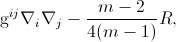 where
where  denotes the Levi-Civita connection of denotes the Levi-Civita connection of  and R its scalar curvature. and R its scalar curvature.
A symmetry of is a differential operator which commutes with . A conformal symmetry of is a differential operator  such that there exists a differential operator such that there exists a differential operator  giving rise to the relation giving rise to the relation  . .
These (conformal) symmetries were completely described on a conformally flat manifold thanks to the works of M. G. Eastwood and J.-P. Michel. In the curved setting, a second-order symmetry of the conformal Laplacian on a particular Einstein manifold was known thanks to a work of B. Carter.
We will describe in this talk all the second-order (conformal) symmetries of on an arbitrary pseudo-Riemannian manifold . The principal symbol of such a (conformal) symmetry has to be a symmetric (conformal) Killing 2-tensor that satisfies some additional condition.
We will determine whether this condition is verified on some pseudo-Riemannian manifolds endowed with some (conformal) Killing tensors, determining in this way whether there exists an obstruction to the existence of (conformal) symmetries in these particular situations.
At the end of the talk, we will show how the study of the conformal symmetries (resp. symmetries) of the conformal Laplacian is related to the study of the R-separation of variables in the Laplace (resp. Helmholtz) equation.
This is a joint work with J.-P. Michel and J. Silhan.
|
|
Stefano Romano (Université Catholique de Louvain)
|
|
Block Toeplitz reductions of the 2D Toda hierarchy |
|
Abstract:
[show]
Slides: [download]
|
|
The Toeplitz lattice was introduced by M. Adler and P. Van Moerbeke as the reduction of the linearized 2D Toda hierarchy arising from Toeplitz moment matrices; recently A. Brini, P. Rossi and G. Carlet identified it with the simplest rational reduction of 2D Toda, and clarified its connection with the Gromov-Witten theory of the resolved conifold. In this talk I will extend this picture introducing a bi-graded version of the Toeplitz lattice, where the moment matrix is block-Toeplitz, and show that it corresponds to the general rational reduction of 2D Toda. Following Brini's treatment of the non bi-graded case, I conjecture that this hierarchy governs the Gromov-Witten theory of the resolved conifold with two orbifold points.
|
|
Pierre van Moerbeke (Université Catholique de Louvain)
|
|
Domino-tilings of Aztec diamonds, random surfaces and the Gaussian Unitary Ensemble (GUE) |
|
Abstract:
[show]
Slides: [download]
|
|
Eigenvalues of successive principal minors of an Hermitian matrix are well known to be interlacing. If an Hermitian matrix has independent Gaussian entries (Gaussian Unitary Ensemble, GUE), then the successive interlacing sets of (random) eigenvalues behave statistically like certain features in domino-tilings of large size Aztec diamond. They can best be explained in terms of associated random surfaces. I intend to present this and related models.
|