Welcome to the SensMoTion Lab
The SensMoTion Lab investigates the neural and computational mechanisms that underlie human sensorimotor control, with a shared focus on how sensory information - particularly touch, proprioception and vision - is integrated to guide movement.
Combining neuroscience, engineering, and modeling, the group aims to understand how humans perceive, adapt, and interact with their environment through coordinated action.
One line of research focuses on the sense of touch , exploring how tactile stimuli are encoded in the peripheral nervous system and transformed into meaningful percepts. This work examines the neural coding of skin deformation, the cortical representation of touch, and how tactile feedback contributes to fine motor control. Experimental approaches include microneurography, neuroimaging, and computational modeling to bridge the gap between peripheral signals and perceptual experience.
Another research axis investigates visuomotor coordination and the control of object manipulation, with a particular emphasis on how humans adapt to changes in environmental dynamics . This includes the study of eye-hand coordination, sensorimotor adaptation, and motor planning in altered gravity environments. The goal is to understand how the nervous system maintains performance and stability in response to novel or unpredictable conditions.
A third research direction develops theoretical and computational models of motor control, grounded in experimental data. This work seeks to uncover the principles of feedback control, motor learning, and neural variability, using both human and robotic systems. It aims to explain how the brain generates robust and flexible motor behavior, and how these processes are shaped by sensory feedback and internal models.
The group's research has applications in neurorehabilitation, where insights into sensorimotor integration inform the design of training protocols and assistive technologies; in the quantitative diagnosis of neurodegenerative diseases, through the development of precise behavioral and neural biomarkers; and in human spatial exploration, where understanding sensorimotor adaptation supports the development of tools and strategies for manipulation and navigation in novel environments, including space.
Latest news:
- Oct 14, 2026
- More newcomers!
- Adèle Debroux joined the team in October! Adèle will do a PhD under the supervision of Frederic
- Isabella Alberti joins the team in October! Isabella will do a PhD under the supervision of Frederic
- Sep 16, 2026
- Newcomers: The lab welcomes new people!
- Elif Ahsen Çakmakci joined the team in July! Ahsen will do a PhD under the supervision of Philippe
- Sofia Nicolussi joined the team in September! Sofia will do a PhD under the joint supervision of Philippe and Benoit
- Gabriela Ishikawa joins the team in October! Gabriela will do a PhD under the joint supervision of Benoit and Greet Kerckhofs
- Sep 16, 2026
- Guillaume Duprez successfully defended his PhD thesis! Congratulation Dr. Duprez!.
- Sep 15, 2026
- Clémence Vandamme successfully defended her PhD thesis! Congratulation Dr. Vandamme!
- Aug 31, 2026
- E MC^2 was a great success! Thank you all for your contributions and participation!
- May 19, 2026
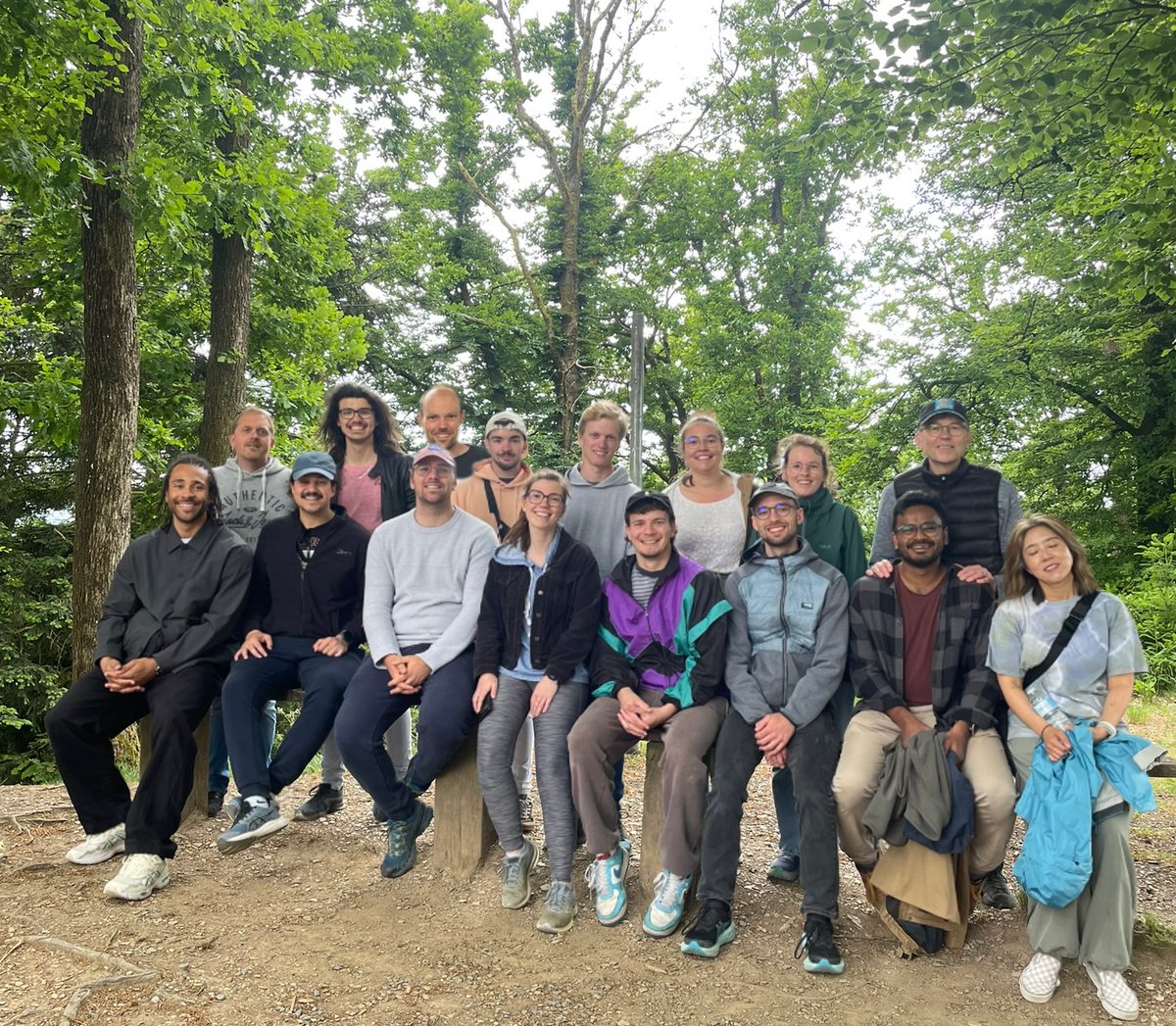
- Lab retreat in Malmedy!