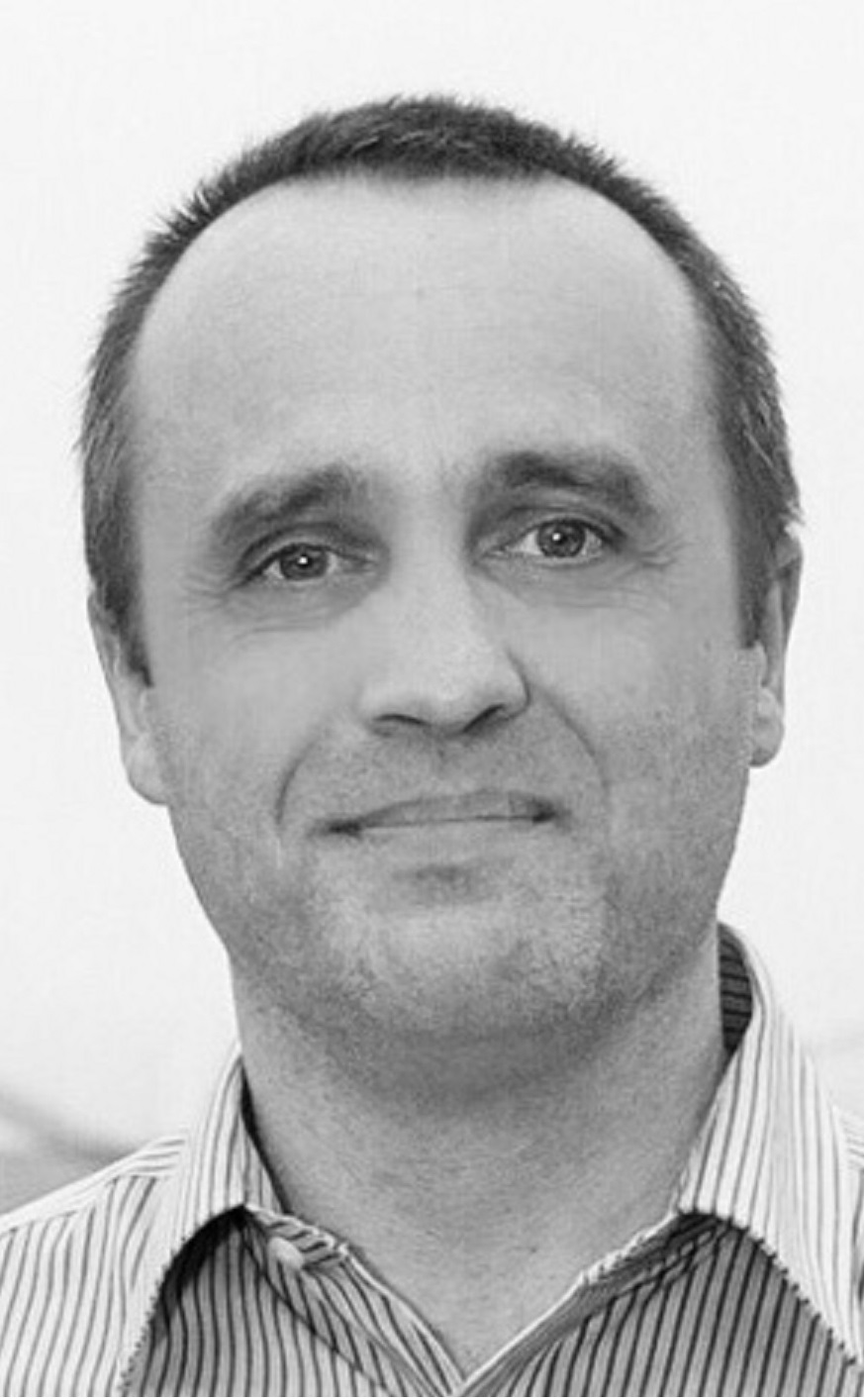
Alessandro Biondi
Associate Professor
Scuola Superiore Sant'Anna - Pisa, Italy
Talk Title: Safe and Secure Machine Learning for
Cyber-Physical
Systems (TBC)
Biography
Alessandro Biondi is Associate Professor of Computer Engineering at the Scuola Superiore Sant'Anna
of Pisa (Italy), where he works at the Real-Time Systems (ReTiS) Laboratory. His main research
interests include the design and implementation of real-time, safe, and secure
cyber-physical systems (CPS), operating systems and hypervisors, safe and secure machine learning
for CPS, cyber-security and virtualization for embedded systems, and analysis and design
optimization for real-time embedded systems.
He graduated cum laude in Computer Engineering at the University of Pisa, Italy, within the
excellence program. In 2017, he received a PhD cum laude in Emerging Digital Technologies
(curriculum Embedded Systems) at the Scuola Superiore Sant'Anna. In 2016, he has been Visiting
Researcher at the Max Planck Institute for Software Systems in
Kaiserslautern (Germany), where he worked with Prof. Bjoern B. Brandenburg.
He was the recipient of several awards including the ACM SIGBED Early Career Award 2019, the IEEE
TCCPS Early Career Award 2023, seven Best Paper Awards, one Best Journal Paper Award (IEEE
Transactions on Industrial Informatics), one Outstanding Paper Award, one Best Presentation Award,
one Best Paper Nomination, the EDAA Outstanding Dissertation Award 2017 in the area "New directions
in software design and optimization for embedded, cyber-physical and secure systems". He's also
included in the Stanford/Elsevier World's Top 2% Scientists.
Alessandro Biondi has been involved as a member of the Program Committee of top conferences in the
area of real-time, embedded, and cyber-physical systems. He is Associate Editor of IEEE Transactions
on Emerging Topics in Computing (TETC), Journal of Real-Time Systems (Springer), and Leibniz
Transactions on Embedded Systems (LITES), and served as reviewer for most IEEE/ACM Transactions
journals that cover research on embedded and cyber-physical systems. He served as TPC Chair of
EMSOFT 2024, TPC Vice-Chair of EMSOFT 2023, General Chair of RTNS 2025, and TPC Track Co-Chair of
ETFA 2023 and 2022. Alessandro Biondi is also member of the Scientific Committee of SERICS: Security
and Rights in the
Cyberspace, the Technical Committee on Factory Automation of the IEEE Industrial Electronics
Society, and part of the Steering Committees of the ACM SIGBED International Conference on Embedded
Software (EMSOFT) and the International Conference on Real-Time Networks and Systems (RTNS).
He published several papers in international conferences, quality journals, and workshops, and filed
two patents. He is currently leading industrial research projects in the area of safety-critical and
secure software systems for automotive and railway industries, and he has been involved in research
projects funded by the European Commission.
Alessandro Biondi is also co-founder of Accelerat, a company focused on software solutions for safe,
secure, and predictable cyber-physical systems.